
Ideas
Plan the van around the adventure
A camper van planning service that connects conversion choices, daily routines, and a realistic first trip.
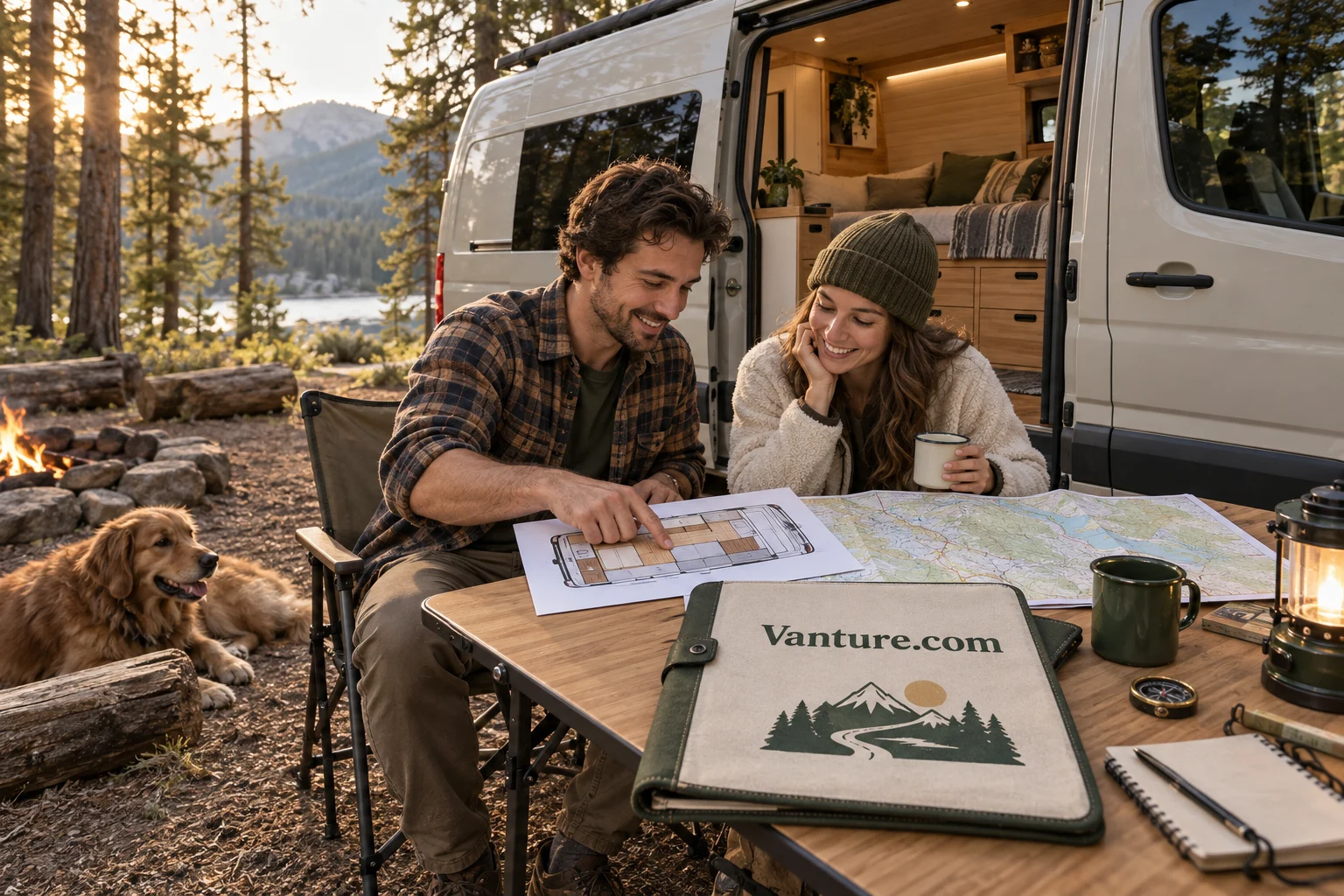
A first camper van can start with a folder full of beautiful interiors and very little clarity about how the owner will use it. A fixed bed looks comfortable until it displaces the bikes. A large kitchen looks appealing until the owner realizes most meals will be cooked at established campsites. Start with the trip before choosing the cabinets.
Vanture.com could become a planning service that connects custom van conversion decisions with realistic first adventures. The name can evoke van alongside venture or adventure, an association a future owner could develop rather than a definitive etymology. This is an illustrative business concept, not an existing conversion shop or travel service.
Help a first-time owner write a better brief
The initial customer could be a couple buying their first camper van for short regional trips. They have a budget and a rough vehicle preference, but need help turning a collection of ideas into a usable brief for a qualified conversion specialist. The service would organize their priorities before they commit to a layout.
Start with ordinary questions. Where will the vehicle be parked at home? How many people will travel and sleep in it? What needs to be carried, and what can stay behind? How often will the owner use established campgrounds? Ask them to describe a wet evening, an early departure, and a day spent mostly driving. Those situations reveal needs that an attractive interior photograph cannot answer.
The first paid offer could include an intake conversation, a comparison of two layout approaches, a written conversion brief, and a proposed first-trip plan. Make the boundary clear: the planning service helps customers define the experience they want. Engineering, installation, vehicle suitability, and compliance work belong with appropriately qualified specialists.
Compare choices through daily routines
A useful layout comparison would show what happens during the day. In one approach, a permanent bed might preserve a ready sleeping space while reducing flexible seating. In another, a convertible seating area could provide more daytime room but require a regular setup routine. The planner should ask which compromise the customer actually prefers.
Storage deserves the same practical attention. Have the customer list the bulky items they intend to bring, then ask the conversion specialist to assess how those items can be accommodated. A planning sketch should not be presented as a build-ready technical drawing. Its purpose is to make priorities and open questions easy to discuss.
Separate essentials from preferences. Sleeping arrangements, the intended passenger count, and a place for necessary equipment may determine the brief. Finishes and decorative details can follow later. The service earns its place by helping the customer communicate these choices, rather than by adding another catalogue of appealing accessories.
Use the first trip as a design test
The trip-planning part makes this offer different from a general design consultation. Ask the customer to choose a modest first journey with a manageable drive and an established place to stay. Build the proposed itinerary around the vehicle they are considering, then identify the questions that affect both the trip and the conversion.
Campground suitability must be checked at the actual destination. Yosemite's campground reservation guidance explains that access roads and maneuvering space can limit RV length. That is a concrete reason to verify a campsite's requirements rather than assume every reservable space will fit a particular van. Other destinations have their own conditions and rules.
A first-trip sheet could identify arrival arrangements, confirmed overnight stops, the route between them, and the information still needing verification. It should distinguish a suggested stop from a booked reservation. The National Park Service trip planning guide is a useful general reference for checking conditions and preparing alternatives, while local sources determine the details.
A concrete pilot offer
Imagine two customers planning a three-night regional trip with bikes and a preference for staying at established campgrounds. The service could compare a fixed sleeping platform with a more flexible interior, documenting the questions each option creates for bike storage and daily use. A conversion specialist would assess the practical and technical implications before any work begins.
The accompanying trip plan could keep the first overnight stop close enough to allow an unhurried arrival. The customers would review the campsite's vehicle requirements and services, then work through how they expect to unload, eat, sleep, and leave the following morning. This is an illustrative exercise, not a recommendation for a particular vehicle or route.
After a trial trip in a suitable rented or borrowed camper, the customers could revise their brief. What was difficult to reach? Which equipment stayed unused? Did setting up the sleeping space feel acceptable? The planner would turn those observations into specific questions for the builder, rather than treating the first draft as a finished answer.
Build relationships before building a directory
A credible distribution path is a relationship with one local conversion specialist. Prospective customers who arrive with unclear priorities could be offered a separate planning consultation. The specialist would need to understand exactly what the planner delivers and where technical responsibility remains. Any referral arrangement should be disclosed to the customer.
The pilot does not need a national network of builders. One reliable relationship and a clear service boundary are enough to test whether the brief saves confusion. The planner could also publish a sample comparison showing how different travel habits change a layout discussion, giving prospective customers a useful preview of the work.
Keep the offer small enough to learn from
Track time spent on intake, research, revisions, and the handoff to the specialist. Ask whether the customer felt better prepared to discuss a build and which questions remained unanswered. The business should learn whether conversion planning and trip planning belong in one package or work better as separate services.
Begin with one customer profile, one specialist relationship, and one sample regional itinerary. That provides a concrete test before expanding into broader RV travel or custom builds. If this is the direction you would like to develop, inquire about Vanture.com and describe the van owners and first journeys you would serve.