
Ideas
Small retreats that give founders room to think
A small founder gathering with a defined participant profile, a working agenda, and follow-up that has a purpose.
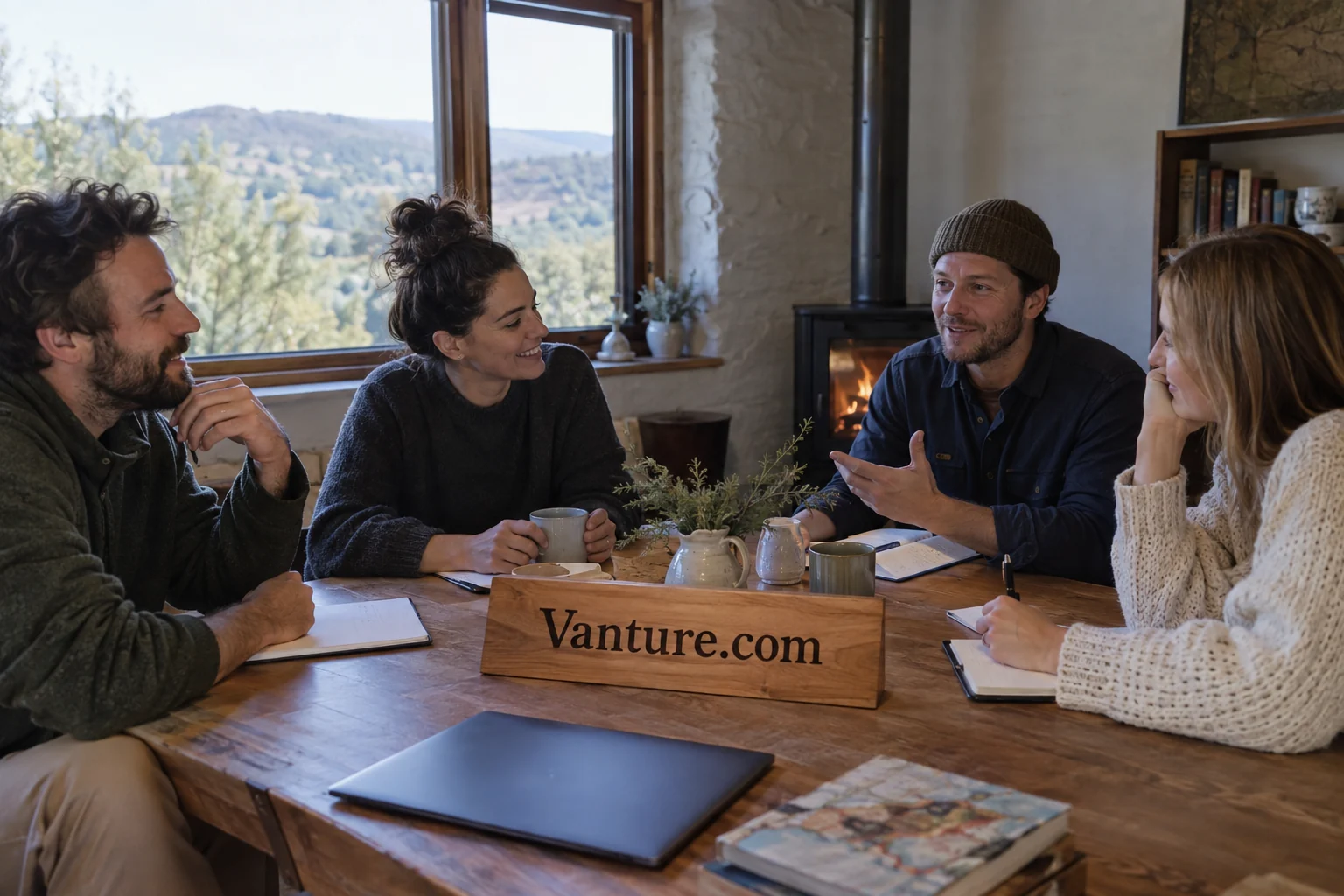
A founder retreat has to earn the time it asks for. The participant is leaving work unfinished, arranging travel, and spending money to join people they may not know. A compelling offer starts with the problem they will work on, then chooses a setting that helps them do it.
Vanture.com could become the home of a small retreat series for founders who want structured time to think with peers. Its possible venture association fits that audience, while the outdoor direction allows a quieter setting. The example below is a proposed business concept, not a scheduled event or an existing community.
Make the participant profile specific
The initial group could be founders running small service businesses who are trying to make one operating decision: what to stop doing, what to delegate, or which offer to concentrate on. That is a clearer invitation than promising personal transformation to every kind of entrepreneur.
Interview six prospective participants before looking for a venue. Ask about the last decision they struggled to make, who helped, and what they have already tried. Find out how much time they can realistically be away. A parent with a tight school schedule and a founder traveling internationally may like the same idea but need very different formats.
The Small Business Administration's planning guidance includes direct research methods such as in-depth interviews. For this concept, interviews would help define the audience and buying decision. They would not prove that a retreat will sell; an encouraging conversation is one piece of evidence, with an actual booking decision still ahead.
Offer a working session with a clear finish
A first retreat might have six participants, one facilitator, and a single overnight stay. Each participant would bring a written decision brief. The group would spend enough time understanding a problem before offering advice, with a facilitator keeping the conversation useful and making room for quieter voices.
The promised deliverable could be a short action plan that states the decision, the assumptions behind it, and the next test. That is something an organizer can structure a session around. Claims about business growth or life-changing breakthroughs would be harder to justify and would set the wrong expectation for a pilot.
A simple agenda could begin with arrival and introductions, move into paired discussion, and leave a longer block for two or three participant cases. An optional walk might give people a change of setting. The following morning could be reserved for remaining cases and individual planning. The group should know what will happen before committing.
Keep the setting in service of the work
The venue needs quiet space, comfortable seating, suitable food arrangements, and a practical arrival route. Check room configurations rather than relying on attractive photographs. People may be reluctant to discuss difficult business questions in a public dining area, and a shared bedroom assumption can change whether someone wants to attend.
Outdoor time should be optional and described accurately. If a walk is part of the agenda, state its character and offer an equivalent way to participate without it. The NPS trip planning guide is useful when considering park activities because it calls for checking conditions and having alternatives. The host would need current local information and appropriate arrangements for the actual activity.
The first pilot does not need a remote or elaborate location. A nearby venue can reduce travel uncertainty and make it easier to adjust the format. The business is testing the usefulness of the gathering, not the participants' willingness to tolerate inconvenient logistics.
Put the economics on one page
List the costs that happen regardless of attendance and the costs that increase with each guest. Room hire, facilitation, and planning time may sit in the first group. Meals, bedrooms, and materials may sit in the second. Include the host's preparation and follow-up hours rather than treating them as free.
Then model a smaller group than the target. What happens if four people attend instead of six? Which costs can change, and which have already been committed? Vendor cancellation dates matter as much as the headline rate. The first event should have a decision date before the organizer becomes responsible for costs they cannot recover.
Price the complete experience clearly. Participants need to know whether travel, meals, accommodation, and follow-up are included. A low opening price with several later additions can undermine trust even if the total cost is reasonable. These details should be settled before inviting payment.
Find the first group through an existing relationship
A local founder community, coworking space, or specialist business network is a plausible starting partner. The organizer can offer a short working session first, allowing prospective participants to experience the facilitation before considering an overnight event. This creates a useful conversation about fit without requiring a large audience.
The invitation should describe who belongs in the room and what they will work on. A sample decision brief can help people recognize whether they have the right problem. Avoid using a prestigious attendee list as a substitute for a useful agenda, especially when no participants have yet committed.
Make follow-up part of the product
A short check-in after the retreat can ask what each participant tried and where the plan became difficult. Agree on the format and date in advance. The host should also state how participant contact details, notes, and any shared business information will be handled, with permission requested before public testimonials or photographs are used.
Review the pilot against specific questions: did everyone get enough working time, was the group compatible, and did the logistics distract from the purpose? Use those answers to decide whether another event is justified. If a small, carefully facilitated retreat series fits your plans, inquire about Vanture.com with the audience and first format you want to test.