
Ideas
A planning desk for small outdoor adventures
A focused itinerary service built around local logistics, realistic timing, and a usable backup plan.
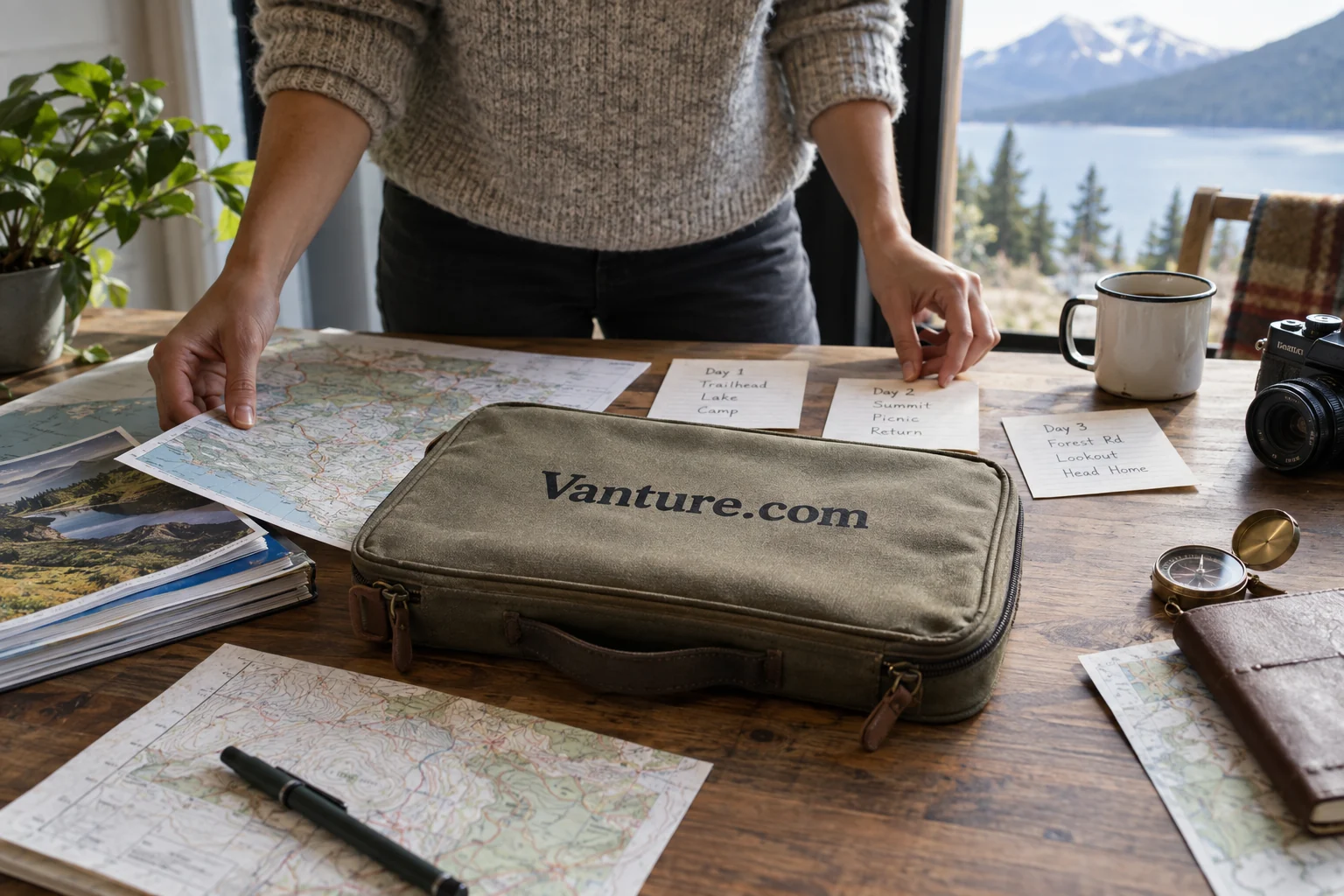
A group wants to spend a weekend outside. One person starts a shared document, another sends six links, and nobody knows which route makes sense after a Friday evening arrival. A useful planning business could take that loose intention and turn it into a small number of workable decisions.
Vanture.com could suit a paid planning desk for manageable outdoor trips. The invented name has an adventure association without committing the business to one activity or destination. This is an illustrative concept for a future owner, not a service currently available through this website.
Begin with one customer and one place
The first customer should be easy to describe. Consider adults traveling from one city who want two nights away and a day outdoors, but prefer help choosing between routes, lodging areas, and transport arrangements. Their question is practical: what can this group comfortably do in the time available?
That is a narrower assignment than planning any trip anywhere. A focused operator could learn one destination area thoroughly, keep a short list of suitable options, and understand the details that repeatedly slow travelers down. The first paid offer might be a planning call followed by a written weekend plan and one round of revisions.
The offer should name its boundaries. Does the customer make reservations directly? Is the planner available during the trip? How close to departure can an itinerary change? Those answers belong beside the price and deliverables when the future business launches. They help customers compare the service with doing the research themselves.
Sell a decision, then document it
A useful intake would collect dates, starting location, transport, accommodation preferences, activity experience, and the group's constraints. Ask what a good weekend looks like to each person. A scenic lunch and a short walk may be a better answer than a demanding route chosen because it photographs well.
The resulting plan could fit into a few clearly labeled sections: arrival, the main activity, food and supplies, an alternative, and departure. Include the links a customer needs to verify current arrangements. Mark which items require a booking and which depend on conditions closer to the date. A plan should make unresolved questions visible.
The National Park Service trip planning guide is a useful reference for parks-based itineraries. It emphasizes current conditions, appropriate equipment, a backup activity, and sharing a plan with someone who is not on the trip. A commercial planner would still need destination-specific checks; a general checklist cannot establish that a route is suitable on a particular weekend.
An example of the first offer
Imagine two friends arriving late on Friday and returning Sunday afternoon. One enjoys longer walks; the other wants time for photography and has little recent hiking experience. The planning desk could propose a Saturday route that both can assess, with a shorter option identified before departure and a relaxed Sunday stop near the drive home.
The value would come from the reasoning. Explain why the lodging area reduces driving, how the arrival time affects the first morning, and what would trigger a change of plan. Show the customer which details are confirmed and when they were checked. A beautiful itinerary with vague access information would miss the main job.
After delivery, ask the customers to read it as if they were leaving tomorrow. Can they find the starting point? Do they understand what they must reserve? Is the alternative genuinely usable? This review may reveal a missing instruction before it becomes an anxious message from a car park.
Build the operation around updates
The planning desk needs a source register for each destination: official access pages, local transport information, booking contacts, and the date of the latest check. Assign responsibility for revisiting it. Seasonal information should carry a season, while a current closure should point directly to the responsible authority.
Equipment guidance deserves similar care. The NPS Ten Essentials describes categories to consider for outdoor activities and notes that additional items depend on the activity. A planner could link that guidance while asking customers to verify their own equipment and ability. Promising that a packing list makes an outing safe would go beyond what a planning document can do.
Before accepting customers, the operator would also need to resolve the business's local requirements, responsibilities, and support arrangements. The concept may remain an information service, or it may grow into booking and guided experiences. Those are different commitments and should be assessed before adding them to the offer.
Reach people at the moment they are planning
A credible first distribution path is a relationship with a small accommodation provider in the chosen area. Guests already ask where to go and what to do. A sample itinerary can show the provider exactly what a referral would offer, including its limits and how questions are handled.
Another useful piece of public content would compare two realistic weekend shapes from the same starting city. It should help a reader decide, even if they never buy planning help. That gives prospective customers a sample of the judgment they would be paying for. Broad inspirational posts are less useful for testing this particular offer.
Test the work before widening the map
Start with one destination and one weekend itinerary. Time the research, intake, writing, revision, and follow-up separately. Ask where customers still felt uncertain and whether the paid help changed a decision. A pilot can uncover a service that takes far more time than the initial fee would cover.
Expand only after the first offer is understandable and repeatable. A second destination should bring the same level of local accuracy, not simply another page in a catalogue. If this is the kind of business you want to develop, inquire about Vanture.com and describe the audience and destination you would begin with.